Flavoenzymes
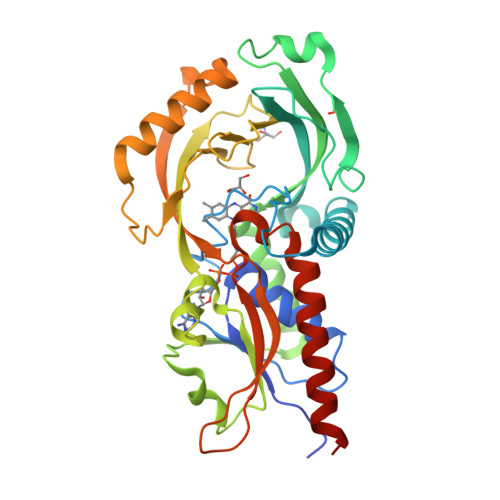
Nardini’s laboratory is involved in the study of flavoproteins and other enzymes and their roles in several human pathologies. In addition, the group investigates wild-type enzymes and engineered variants for their potential biotechnological applications. The laboratory’s main research lines focus on FAD-containing enzymes involved in L-amino acid and D-amino acid oxidation.
Regarding L-amino acid oxidases, we have solved the structures of L-amino acid deaminase from Proteus myxofaciens (PmaLAAD) and aminoacetone oxidase from Streptococcus oligofermentans (SoAAO). PmaLAAD is a membrane-bound flavoenzyme that catalyzes the oxidative deamination of neutral and aromatic L-amino acids to the corresponding keto acids and ammonia. Notably, PmaLAAD does not use dioxygen to reoxidize reduced FADH₂ and therefore does not produce hydrogen peroxide; instead, it transfers electrons to a cytochrome b–like protein. Our structural studies are expected to pave the way for the rational engineering of this enzyme, improving its versatility and efficiency for the biocatalytic production of enantiomerically pure amino acids. (PDB-codes: 5FJM and 5FJN; Motta et al., 2016). SoAAO, in contrast, is a member of a novel family of bacterial flavoproteins with specialized functions, such as contributing to antioxidant defense against the pro-oxidant metabolite aminoacetone. Our results show that the SoAAO fold exhibits a unique three-domain architecture, distinct from that of LAAOs, and does not display LAAO activity. These findings support a specialized role for SoAAO in microbial defense, linked to aminoacetone catabolism via a pathway that produces dimethylpyrazine derivatives rather than methylglyoxal. (PDB-codes: 4CNJ and 4CNK; Molla et al., 2014).
On the D-amino acid oxidase side, we characterized the mechanism and pharmacodynamics of five structurally distinct inhibitors of human D-amino acid oxidase (hDAAO). DAAO plays a key role in regulating NMDAR neurotransmission, as its activity can physiologically limit NMDAR function by reducing local concentrations of D-serine within the astrocytic environment surrounding neurons and synapses in specific brain regions. Understanding the mechanism and pharmacodynamics of DAAO inhibition, as well as its physiological role in NMDAR regulation, is essential to exploit the therapeutic potential of small-molecule inhibitors for disorders such as schizophrenia or neuropathic pain. (PDB-codes: 3ZNN, 3ZNO, 3ZNQ, and 3ZNP; Hopkins et al., 2013). The latest entry in our structural gallery is human D-aspartate oxidase (hDASPO). This enzyme catalyzes the oxidative deamination of D-Asp, producing oxaloacetate, ammonia, and hydrogen peroxide. D-Asp exhibits many characteristics of a classical neurotransmitter, acting as an agonist at postsynaptic NMDARs. Our structural results reveal unique features of hDASPO that are critical for regulating cellular D-Asp levels and provide a foundation for the rational design of inhibitors aimed at reducing D-Asp catabolism, with potential applications as novel antipsychotic drugs. (PDB-code: 6RKF; Molla et al., 2020).
Publications
Molla G, Chaves-Sanjuan A, Savinelli A, Nardini M, Pollegioni L. Structure and kinetic properties of human d-aspartate oxidase, the enzyme-controlling d-aspartate levels in brain. FASEB J. 2020 Jan;34(1):1182-1197. doi: 10.1096/fj.201901703R. [PubMed: 31914658]
Motta P, Molla G, Pollegioni L, Nardini M. Structure-Function Relationships in l-Amino Acid Deaminase, a Flavoprotein Belonging to a Novel Class of Biotechnologically Relevant Enzymes. J Biol Chem. 2016 May 13;291(20):10457-75. doi: 10.1074/jbc.M115.703819. [PubMed: 27022028]
Molla G, Nardini M, Motta P, D’Arrigo P, Panzeri W, Pollegioni L. Aminoacetone oxidase from Streptococcus oligofermentans belongs to a new three-domain family of bacterial flavoproteins. Biochem J. 2014 Dec 15;464(3):387-99. doi: 10.1042/BJ20140972. [PubMed: 25269103]
Hopkins SC, Heffernan ML, Saraswat LD, Bowen CA, Melnick L, Hardy LW, Orsini MA, Allen MS, Koch P, Spear KL, Foglesong RJ, Soukri M, Chytil M, Fang QK, Jones SW, Varney MA, Panatier A, Oliet SH, Pollegioni L, Piubelli L, Molla G, Nardini M, Large TH. Structural, kinetic, and pharmacodynamic mechanisms of D-amino acid oxidase inhibition by small molecules. J Med Chem. 2013 May 9;56(9):3710-24. doi: 10.1021/jm4002583. [PubMed: 23631755]
Caldinelli L, Sacchi S, Molla G, Nardini M, Pollegioni L. Characterization of human DAAO variants potentially related to an increased risk of schizophrenia. Biochim Biophys Acta. 2013 Mar;1832(3):400-10. doi: 10.1016/j.bbadis.2012.11.019. [PubMed: 23219954]
Lab Team
Antonio Chaves-Sanjuan, Haidi Shehi, Marco Nardini
Main collaborators
Prof. L. Pollegioni and Prof. G. Molla, University of Insubria (Italy)
Dr. A. Citarella, University of Cagliari (Italy)
Funding
Ministero Università e Ricerca Scientifica PRIN 2020 (2020K53E57)